
Ecuador 2015 shrimp output at record level; slight growth expected for 2016
February 5, 2016
Alicia Villegas
Ecuador’s shrimp exports totaled a record-high of 720 million pounds last year, as output is expected to grow slightly this year.
“I wouldn’t say this year we’ll see a double-digit growth, but I think Ecuador won’t decrease its production, providing that we don’t see a drastic fall in prices or a major trade eventuality,” Jose A. Camposano, executive chairman at the National Chamber of Aquaculture in Ecuador (CNA, in Spanish) told Undercurrent News.
Last year’s exports represented a 17.8% increase over 2014, and recorded an average monthly output of 60m pounds, driven by Asia’s increasing demand throughout the last three years.
From 2013, when the early mortality syndrome (EMS) ravaged South East Asia’s shrimp production, exports to the Asian country boomed from Ecuador.
But last year’s higher production — not only from Ecuador, but also from Southeast Asian shrimp producers recovered from EMS — have put shrimp prices under pressure.
This has been reflected in Ecuador’s exports value, which reached $2.3 billion in 2015, down 8% or $200m year-on-year, according to data from CNA.
“For this year, I don’t think we will repeat a 18% exports increase, but the stable price trend seen in the last months, motivates producers to maintain current production levels. Obviously if there is suddenly a sharp drop in prices, producers will keep an eye on costs,” Camposano said.
January was the month with the lowest exports from Ecuadorian shrimp producers, reaching 50.5m pounds (see picture below). On the contrary, May hit historic shrimp exports, with 66.1m pounds exported.
From May through December, Ecuador exported above 60m pounds every month, with the exception of September.
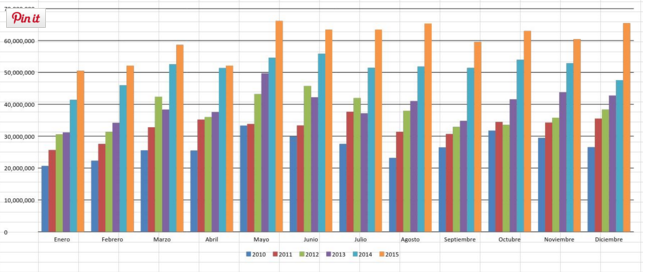
Source: CNA
September showed a decrease in exports, linked to lower densities seen from mid-2015, spurred by fears of higher mortalities last summer.
Although Ecuadorian authorities ruled out EMS presence in the country, talk circulated at the time that this disease was behind shrimp mortalities. Undercurrent reported that EMS had spread to Honduras and Nicaragua during the summer.
Some sources, however, said shrimp mortalities in Ecuador were linked to seasonal reasons and changes of temperatures, as others said the drop in densities tried to offset a downward trend in prices seen before summer.
“At a time Ecuador demanded fewer larvae but eventually production volumes increased, as lower densities led to higher survival rates in the production cycle,” Camposano said.
“It wasn’t an strategic decision, but fortune played in favor of producers. They tried to lower costs because prices were not as good to farm more intensively, but lower densities brought higher volumes and this has been reflected in exports,” he said.
According to the shrimp panel at the recent Global Seafood Market Conference in Miami, Florida, Ecuador’s production in 2016 will be around the same as 2015, at 320,000 metric tons.
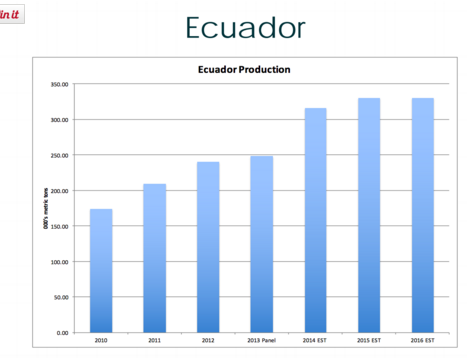
Ecuador shrimp outlook. Source: Shrimp panel, 2016 Global Seafood Market Conference
